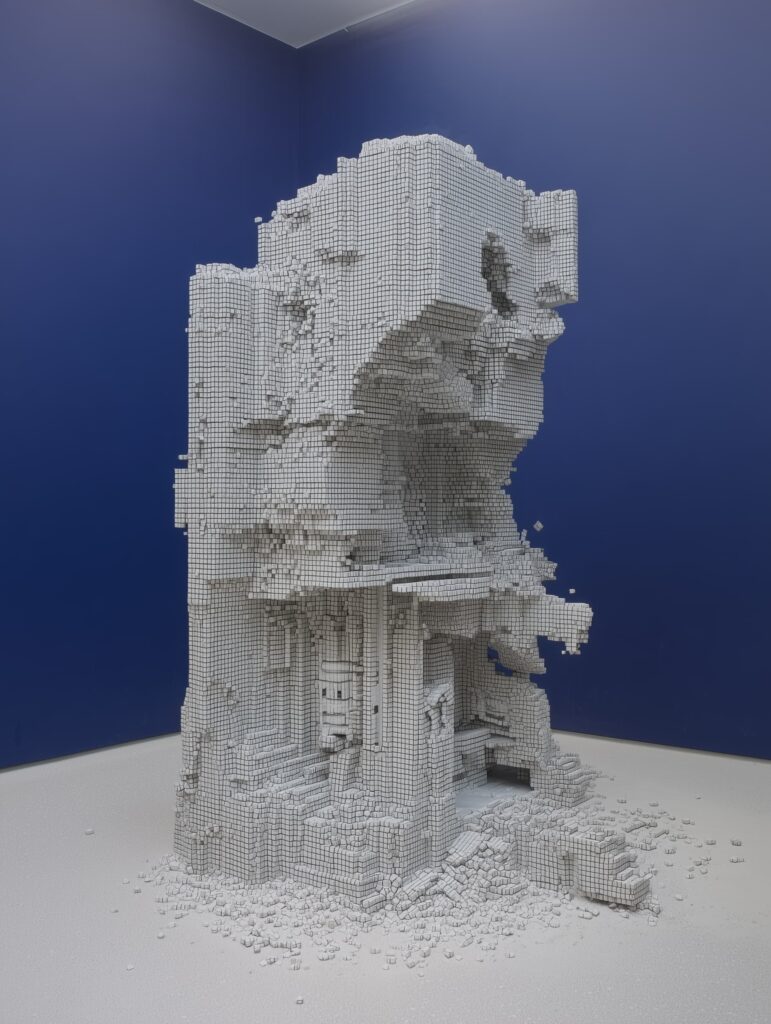
The Aesthetics of Decay: How Ruins Inspire Contemporary Sculpture and Installation Art
Ruins have long occupied a special place in human imagination. From ancient temples and abandoned factories to crumbling urban spaces, decay has been interpreted as both an end and a beginning. In contemporary sculpture and installation art, ruins are no longer viewed only as historical remnants. They have become active sources of inspiration, shaping artistic language, material choices, and conceptual frameworks. The aesthetics of decay speaks to time, memory, and transformation in ways that feel especially relevant in the modern world.
Ruins as Visual and Conceptual Material
For contemporary artists, ruins offer more than visual drama. They provide a vocabulary of textures, fractures, erosion, and absence. Cracked concrete, rusted metal, peeling paint, and collapsed structures introduce surfaces shaped by time rather than design. Artists often recreate or reference these qualities to challenge ideas of permanence and perfection traditionally associated with sculpture.
Conceptually, ruins embody contradiction. They are evidence of past ambition and present failure, stability and collapse, human intention and natural reclamation. Installation artists frequently draw on this tension, using ruin-like forms to question progress, urban development, and the lifespan of cultural systems.
From Romantic Ruins to Contemporary Practice
Historically, ruins were romanticized as symbols of lost civilizations and poetic decline. Painters and architects of earlier centuries depicted ruins as melancholic landscapes filled with nostalgia. Contemporary art, however, approaches decay differently. Instead of distant admiration, artists engage directly with ruin as a living process.
Modern sculptors and installation artists often work with materials sourced from abandoned sites or mimic architectural collapse within gallery spaces. The goal is not to recreate history, but to expose viewers to the experience of instability and transformation. Ruins are no longer passive subjects. They become active environments that surround, confront, and involve the audience.
Material Choices Shaped by Decay
The influence of ruins is clearly visible in material selection. Concrete fragments, salvaged wood, corroded steel, bricks, and found objects from demolished structures are common in contemporary installations. These materials carry their own histories, marked by use, neglect, and environmental exposure.
Artists intentionally avoid polished finishes, allowing imperfections to remain visible. Cracks are preserved rather than repaired. Rust is embraced rather than removed. This material honesty reflects a broader rejection of artificial refinement and highlights decay as an aesthetic value in itself.
In some works, artists accelerate decay through chemical processes, water exposure, or organic growth. The artwork continues to change over time, mirroring the slow transformation of ruins in real landscapes.
Installation Art and the Experience of Collapse
Installation art is particularly suited to exploring decay because it operates on a spatial scale. Many contemporary installations recreate the feeling of walking through a ruin. Viewers move among fractured walls, unstable structures, or fragmented architectural references. Sound, light, and shadow are often used to amplify the sense of abandonment or transition.
These immersive environments encourage physical awareness. Uneven surfaces, narrow passages, and altered perspectives disrupt the comfort of the gallery setting. The body becomes part of the artwork, experiencing vulnerability and uncertainty similar to that found in decaying spaces.
By placing ruin-like installations in clean, institutional contexts, artists create a powerful contrast. The gallery becomes a site where order and collapse coexist, forcing viewers to reconsider assumptions about stability and control.
Ruins, Memory, and Cultural Identity
Ruins are deeply connected to memory. They represent what remains after systems fail or move on. Contemporary artists often use decay to address collective histories, political change, and social trauma. Industrial ruins may reference the decline of manufacturing economies. Abandoned buildings can evoke displacement, migration, or forgotten communities.
Rather than presenting clear narratives, many installations rely on ambiguity. Fragments suggest stories without fully revealing them. This openness allows viewers to project their own experiences and interpretations, making decay a shared psychological space rather than a fixed historical statement.
In this sense, the aesthetics of decay becomes a tool for exploring identity. What societies choose to preserve, abandon, or erase is reflected in the ruins they leave behind. Contemporary art uses these remnants to question whose histories are remembered and whose are allowed to disappear.
Nature Reclaiming Structure
A recurring theme in ruin-inspired art is the interaction between built environments and natural forces. Plants growing through concrete, water seeping into foundations, and erosion reshaping structures symbolize nature’s quiet persistence. Many contemporary installations incorporate organic elements to highlight this process.
By combining architectural fragments with soil, moss, or living plants, artists blur the boundary between human construction and ecological systems. Decay is shown not as destruction, but as transformation. Structures return to material states that can be reused, repurposed, or absorbed into new forms.
This perspective aligns with broader environmental concerns. Ruin-inspired art often reflects anxieties about sustainability, consumption, and the long-term impact of human activity on the planet.
Temporality and Impermanence in Contemporary Art
One of the most significant contributions of ruin aesthetics to contemporary sculpture and installation is the emphasis on impermanence. Many works are intentionally temporary. They are designed to degrade, shift, or be dismantled after exhibition.
This challenges traditional ideas of art as an object meant to endure. Instead, the artwork exists within time, subject to change and disappearance. Documentation becomes part of the work, capturing stages of transformation rather than preserving a final state.
Impermanence reinforces the central message of decay: nothing remains fixed. Just as ruins evolve, so do cultural meanings and artistic forms.
Why Decay Resonates Today
The growing interest in ruins within contemporary art reflects broader cultural conditions. Rapid urbanization, technological obsolescence, and environmental uncertainty have made decay a visible part of everyday life. Buildings age faster than ever. Systems are replaced before they fully stabilize.
Artists respond to this reality by embracing instability rather than resisting it. The aesthetics of decay offers a way to process uncertainty without nostalgia or denial. It acknowledges loss while also recognizing potential for renewal.
Conclusion
The influence of ruins on contemporary sculpture and installation art goes far beyond visual reference. Decay provides a framework for thinking about time, memory, materiality, and transformation. Through fractured forms, raw materials, and immersive environments, artists turn collapse into a creative force.
By engaging with ruins, contemporary art does not mourn the past. It examines the present and questions the future. In decay, artists find not only evidence of what has been lost, but insight into how meaning is continuously reshaped.